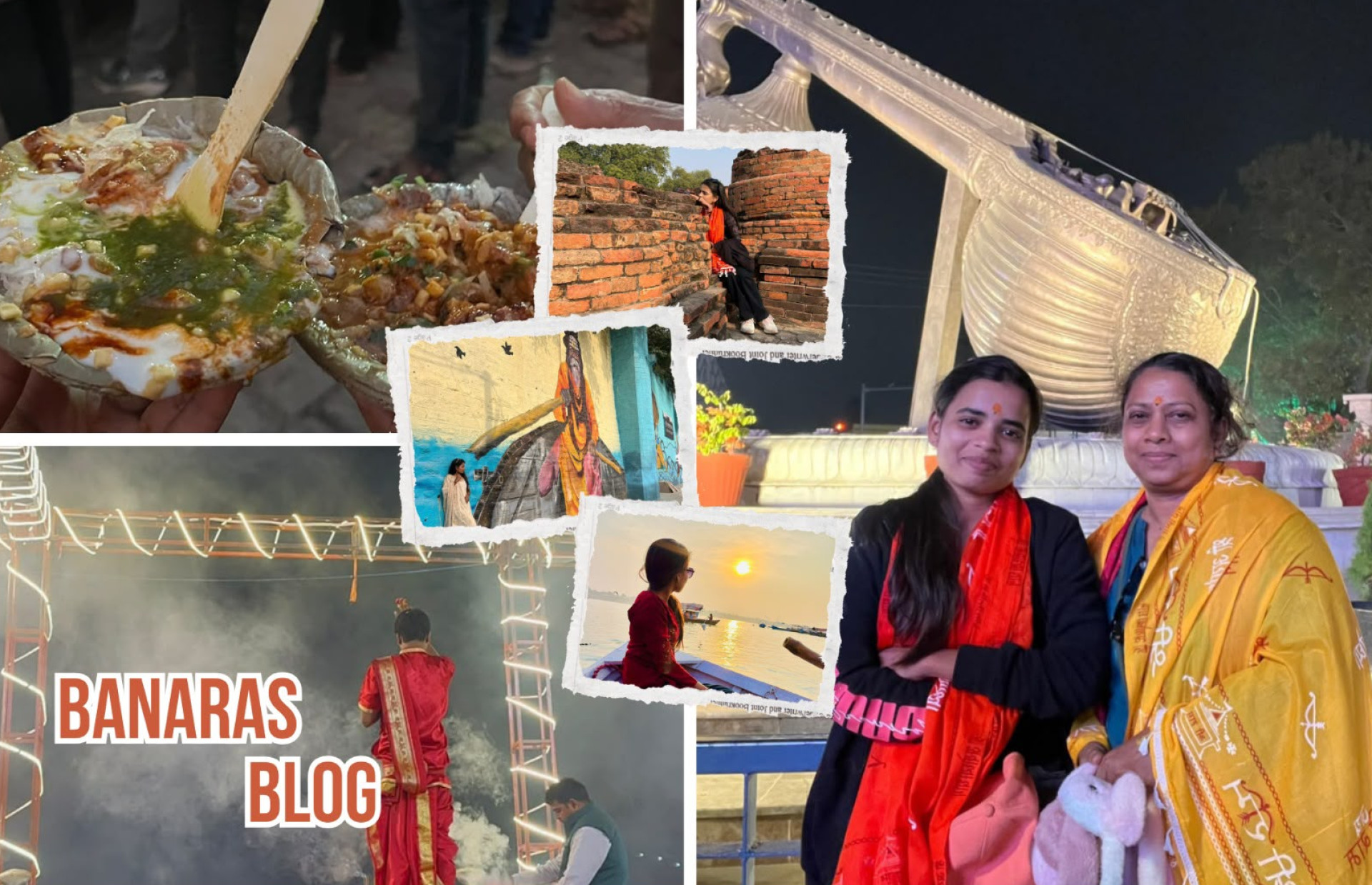
When Banaras Called…
When Banaras Called… A Journey of Faith, Reflection & Unexpected Moments
Sometimes, a journey is planned months in advance.
And sometimes, you simply wake up one day and feel, “Banaras jaana baaki hai… toh chalo, ab jaate hain.”
That is exactly how this journey began.
For years, Mansi and I had been trying to travel together on one of our group tours, but somehow, it never worked out. Every time there was a plan, something or the other came in the way.
Finally, in December 2025, it happened.
Looking back, we often wondered—why did this journey take so long to happen?
Maybe it was simply waiting for the right time.
We had also wanted to visit Ayodhya and see Ram Mandir. By the time we finally went, the temple had become a reality and Ayodhya had a completely different atmosphere around it.
And December turned out to be a lovely time to travel. The winter chill, the crisp mornings and what we call gulabi thandi made the journey even more enjoyable.
What started as a simple plan to visit Banaras became a journey through Prayagraj, Ayodhya, Varanasi, Sarnath, Bodh Gaya and Gaya—filled with history, faith, food, laughter, unexpected situations and many memorable moments.
Prayagraj – Where the Journey Began
(1).jpeg)
.jpeg)
We began our journey on 1st December, and on 2nd December, we reached Prayagraj.
After checking into the hotel and freshening up, we headed straight towards the Triveni Sangam.
The boat ride was beautiful. The views along the way were peaceful, and on our return, the evening atmosphere made it even more memorable. Mansi, as always, was busy capturing photographs.
But the experience also made me think.
I saw people taking holy dips, praying and performing rituals, while at the same time, there was so much waste around the river.
If we come here to cleanse ourselves, shouldn’t we also take responsibility for keeping the river clean?
Faith and responsibility should go hand in hand.
The Triveni Sangam, revered as the confluence of the Ganga, Yamuna and the mythical Saraswati, holds immense religious significance. A place that receives so many devotees deserves our care and respect.
From there, we went towards Allahabad Fort, built by Emperor Akbar in 1583. Standing close to the Sangam, it was another reminder of the layers of history that exist in this region.
After a long day, we returned to the hotel and rested.
Anand Bhavan – Walking Through History
The next morning, we visited Anand Bhavan.
This was not just another sightseeing stop for me.
Anand Bhavan is closely connected with the Nehru family and India’s freedom movement. More than being a family home, it became an important centre for political discussions, meetings and activities during the freedom struggle.
The Congress-League committee met here in 1916. Mahatma Gandhi was closely associated with Anand Bhavan during the non-cooperation movement, and the house witnessed important discussions, meetings and rallies. It also served as the headquarters of the Indian National Congress until 1946.
Walking through its rooms, seeing the photographs, belongings and spaces connected with these personalities, I kept wondering how many important conversations and decisions must have taken place within those walls.
It felt less like simply looking at history and more like standing inside a chapter of it.
The house was built by Motilal Nehru in 1927, and the family moved into it in 1929. In 1970, Indira Gandhi donated Anand Bhavan to the Jawaharlal Nehru Memorial Fund, after which it became a museum.
From Prayagraj, we left for Ayodhya.
Ayodhya – A Moment I Will Always Remember
After reaching Ayodhya, we went towards the banks of the Sarayu River to attend the evening aarti.
The atmosphere was beautiful, but one thing disturbed me.
During the aarti, I noticed situations where people who wanted to perform certain puja-related activities were being asked for money. I understand that religious places have arrangements and rituals, but personally, I felt that devotion should not make a person feel that spirituality comes with a price attached to it.
After the aarti, we explored Ayodhya a little and visited Lata Mangeshkar Chowk before returning to the hotel.
.jpeg)
(1).jpeg)
The next morning was the moment we had been waiting for.
Ram Mandir.
We had heard that devotees could spend several hours waiting for darshan, so we were mentally prepared for a long wait.
But somehow, we were extremely fortunate.
We got darshan much faster than we expected.
And then something happened that I still cannot completely explain.
The moment I entered and saw Ram Ji, my eyes filled with tears.
I am not someone who usually gets emotional like that inside a temple. This had never happened to me before.
But that day, it did.
Maybe it was the years of wanting to visit Ayodhya. Maybe it was the feeling of finally being there. Maybe it was simply the atmosphere and the moment itself.
I just know that for a few seconds, I had no words.
Some moments are simply meant to be felt.
Varanasi – The Banaras Experience
After Ayodhya, we travelled towards Varanasi.
The entire day went into travelling, and by evening, we finally stepped out to explore the ghats.
Our first stop was Dashashwamedh Ghat.
Before the aarti, we decided to try the famous chaat at Kashi Chat Bhandar.
I have to be honest—Instagram has created such a huge hype around certain food places that sometimes the actual experience does not match the expectation.
The chaat was good, but personally, I did not feel it was so extraordinary that one should stand in a huge crowd simply because social media calls it “the best”.
For me, Varanasi itself was far more interesting than chasing viral food spots.
Then came the Ganga Aarti.
We found a quiet place by the ghat and simply sat there.
No rushing. No trying to capture everything on camera.
Just sitting beside the Ganga, watching the lights, listening to the chants and taking in the atmosphere.
That quiet pause became one of my favourite moments in Varanasi.
One Funny Banaras Story
Of course, every trip needs one funny story.
While walking through the streets, Mansi spotted a place selling bhang.
She wanted to try it.
She had some.
And after a while, she realised exactly what she had signed up for!
Her head started spinning, and she immediately took an oath that this would be her first and last bhang experience of her life! 😂
We laughed about it later.
We went back, rested and slept.
Banaras had already given us enough for one day.
Sarnath – Where Everything Felt Quiet
The next day, we visited Sarnath.
After the energy of Ayodhya and the vibrant ghats of Varanasi, Sarnath felt completely different.
Sarnath is one of the most important Buddhist pilgrimage sites in the world. It is traditionally regarded as the place where Gautama Buddha delivered his first sermon after attaining enlightenment and began teaching his earliest disciples.
.jpeg)
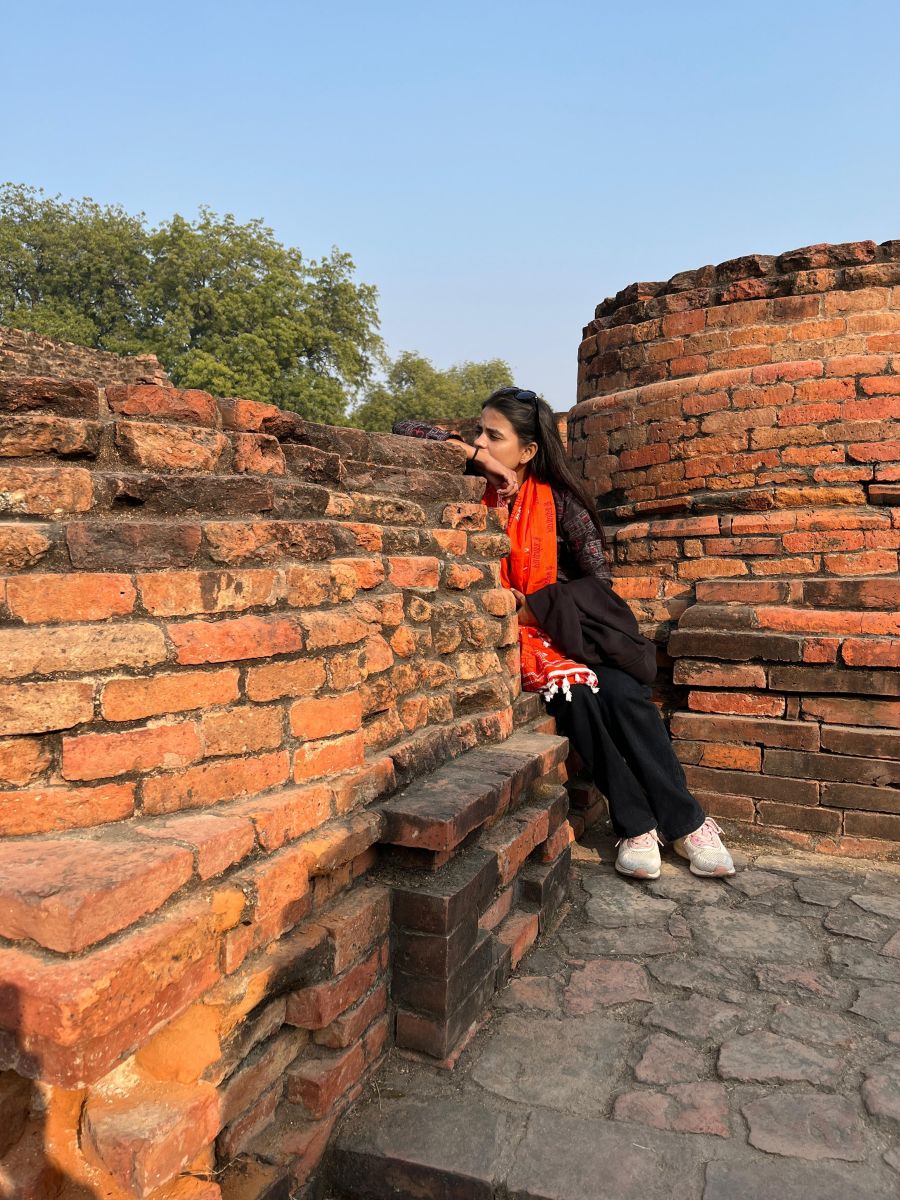
The archaeological site reflects the long history of Buddhism in the region, with remains of stupas, monasteries and other structures built and developed over different periods. The Chaukhandi Stupa is also an important landmark associated with the site.
In 2026, the Ancient Buddhist Site of Sarnath was inscribed on the UNESCO World Heritage List, recognising its outstanding historical and cultural significance.
We visited the temples, explored the archaeological area and did a little shopping.
But what stayed with me most was the atmosphere.
There was something deeply peaceful about being there.
After the noise and constant movement of Varanasi, Sarnath seemed to slow everything down.
It reminded me that spirituality does not always have to be loud.
Sometimes, it is found in silence.
The Lanes of Banaras
Later that day, we returned to Dashashwamedh Ghat and once again walked through the narrow lanes of Banaras.
Those lanes are a world of their own.
One turn takes you to a temple. Another opens towards a ghat. A small shop appears between two old buildings. People are walking in every direction.
There is noise, colour, food, faith, business and history—all existing together.
That is Banaras.
It is not polished. It is not always organised.
But it is alive.
Bodh Gaya – A Different Kind of Peace
Our next destination was Bodh Gaya.
The journey took around seven hours, but it was worth it to experience a completely different spiritual landscape.
We visited the Mahabodhi Temple complex and nearby places, including Sujata Temple. We also explored the streets and some of the Buddhist temples, many of which reflected different architectural styles and influences.
The Mahabodhi Temple Complex is a UNESCO World Heritage Site and is regarded as one of the most important places associated with Buddha’s enlightenment. The present temple dates back to around the 5th–6th centuries, while the first temple at the site is associated with Emperor Ashoka in the 3rd century BCE.
Standing there among pilgrims and visitors from different parts of the world, I was reminded of how travel allows us to experience cultures and beliefs beyond our own.
We stayed overnight in Bodh Gaya.
Gaya – Another Perspective
The next day, we travelled to Gaya.
We visited Vishnupad Temple, an important Hindu pilgrimage site associated with Lord Vishnu and the traditional practice of Pind Daan. The present temple structure is associated with Queen Ahilyabai Holkar and dates back to the 18th century.
We also went looking for the Phalgu River.
Interestingly, we did not really get the river experience we had imagined.
Gaya, for us, did not feel as compelling as some of the other places on this journey.
But that too is part of travelling.
Not every destination has to become your favourite. Sometimes, a place simply gives you a different perspective.
By evening, we travelled back towards Varanasi.
Kashi Vishwanath and Manikarnika
After returning to Varanasi and resting, the next morning we woke up early for Kashi Vishwanath Temple.
Once again, we were prepared for a long wait.
And once again, somehow, we were lucky.
We got darshan much earlier than expected.
There was a quiet happiness between us. Both Ayodhya and Kashi had given us something we had not expected—the feeling that sometimes things simply fall into place.
After the temple, we came out from the side behind the temple and started exploring the ghats.
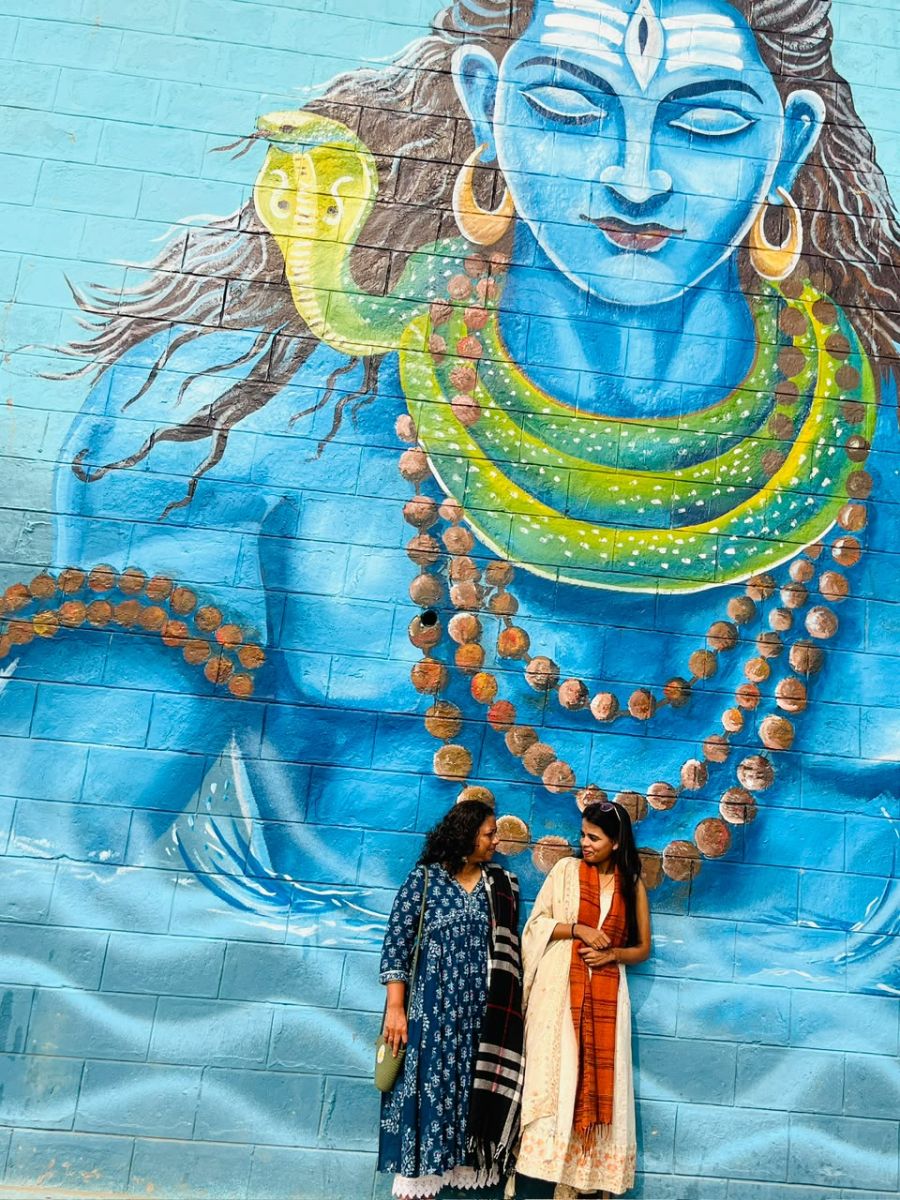
Soon, we reached near Manikarnika Ghat.
We could see the funeral pyres burning.
Everything was happening openly—people walking around, rituals taking place and life continuing alongside death.
We tried to go closer but, honestly, I couldn’t.
There was something overwhelming about standing there.
So we stepped back.
And perhaps that was enough.
Manikarnika made one thing very clear to me:
In Varanasi, life and death are not separate stories. They exist side by side.
We continued walking through the ghats, taking photographs and observing life around us.
Every ghat seemed to have its own character. Some were crowded, some peaceful, some religious and some full of everyday life.
You do not always have to search for an experience in Varanasi.
Sometimes, you simply walk—and something finds you.
When Our Flight Got Cancelled
Just when we thought our trip was coming to an end, we discovered that our IndiGo flight for the following day had been cancelled.
For a few moments, there was complete confusion.
We were standing in the middle of the busy streets of Banaras thinking,
“Ab kya karein?”
After discussing everything, we finally decided to stay for one more day and take another flight the next day.
And strangely, I was happy that the flight had been cancelled.
Because it gave us one extra day in Banaras.
One More Day in Banaras
On our extra day, we visited Ramnagar Fort.
It was a pleasant experience and gave us another glimpse into the history and heritage around Varanasi.
Later, while returning, we went to Namo Ghat.
.jpeg)
A cultural programme was taking place there, so we sat down and watched it for some time.
And then came the evening aarti.
Of all the aartis we attended during this journey, this one stayed with me the most.
I don’t know if it was the setting, the music, the atmosphere, the Ganga, the people or simply the mood I was in that evening.
But the energy was incredible.
There were moments when I literally had goosebumps.
I just stood there thinking—
“Wow… this is Banaras.”
What I Took Back Home
The next day, we finally began our journey back to Mumbai.
Somewhere between packing our bags, leaving the hotel and heading towards the airport, I realised that this trip had become much more than a holiday.
It had taken us through history, faith, different traditions, laughter, chaos, silence and a few completely unplanned turns.
We had started with a simple thought:
“Banaras jaana baaki hai… chalo jaate hain.”
And that one thought took us through Prayagraj, Ayodhya, Varanasi, Sarnath, Bodh Gaya and Gaya.
There were moments that made us laugh, moments that made us uncomfortable, moments that made us think—and one that brought tears to my eyes.
Mansi and I had been trying for years to travel together.
Maybe it simply wasn’t meant to happen earlier.
Maybe we had to wait for the right time.
And when it finally happened, the journey turned out to be much more than what we had planned.
Not everything was perfect.
And it didn’t need to be.
Because sometimes, the best part of travelling is not the itinerary you create, but the unexpected moments you bring back with you.
And this journey gave me plenty of those.